Reflective method
Agency lens
Control over takeoff, direction, and landing can distinguish freedom from instability.
Context record · Flying
Flying dreams vary with effort, altitude, direction, visibility, and whether landing remains possible.
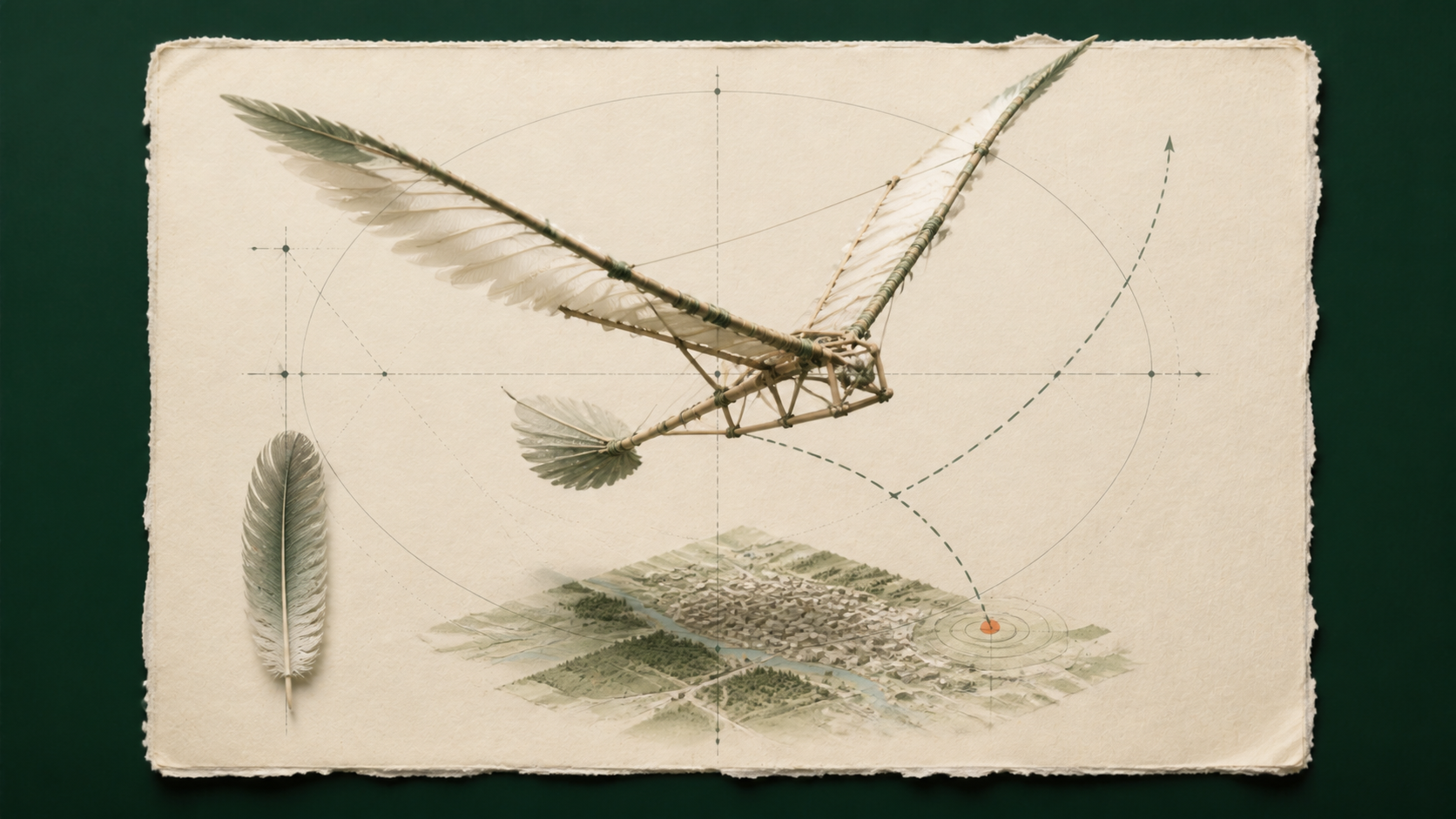
Created for this motif’s context records. The image illustrates the subject; it is not evidence for an interpretation.
Ask what looks different now that you have emotional or practical distance from it.
It does not diagnose a condition, reveal another person’s intentions, or predict a future event. A memorable match after waking can be meaningful to you without establishing a predictive mechanism.
Details that change the reading
Places you avoided or revisited
Whether people below noticed
Altitude and clarity
Compare explanations
Reflective method
Control over takeoff, direction, and landing can distinguish freedom from instability.
Plausible mechanism
Vestibular sensations during sleep may contribute to floating, falling, or flight experiences.
Research-informed
Recent success, escape wishes, travel, games, films, or physical activities can supply the scene.
Follow-up questions
Sources & claim limits
These sources support the research labels used on this page. They do not demonstrate that this scene has a universal interpretation or predicts an event.
In one long series of 6,701 dreams, unaided flight was uncommon and highly variable; lucidity changed several characteristics of the flight.
↗Four representative German samples found recent flying dreams in 7.5% of respondents, with a historical increase the authors cautiously linked to more air travel.
↗Want to include your emotion and action?